Beverly Press Park Labrea News: L.A. lawmakers call for national film tax credit
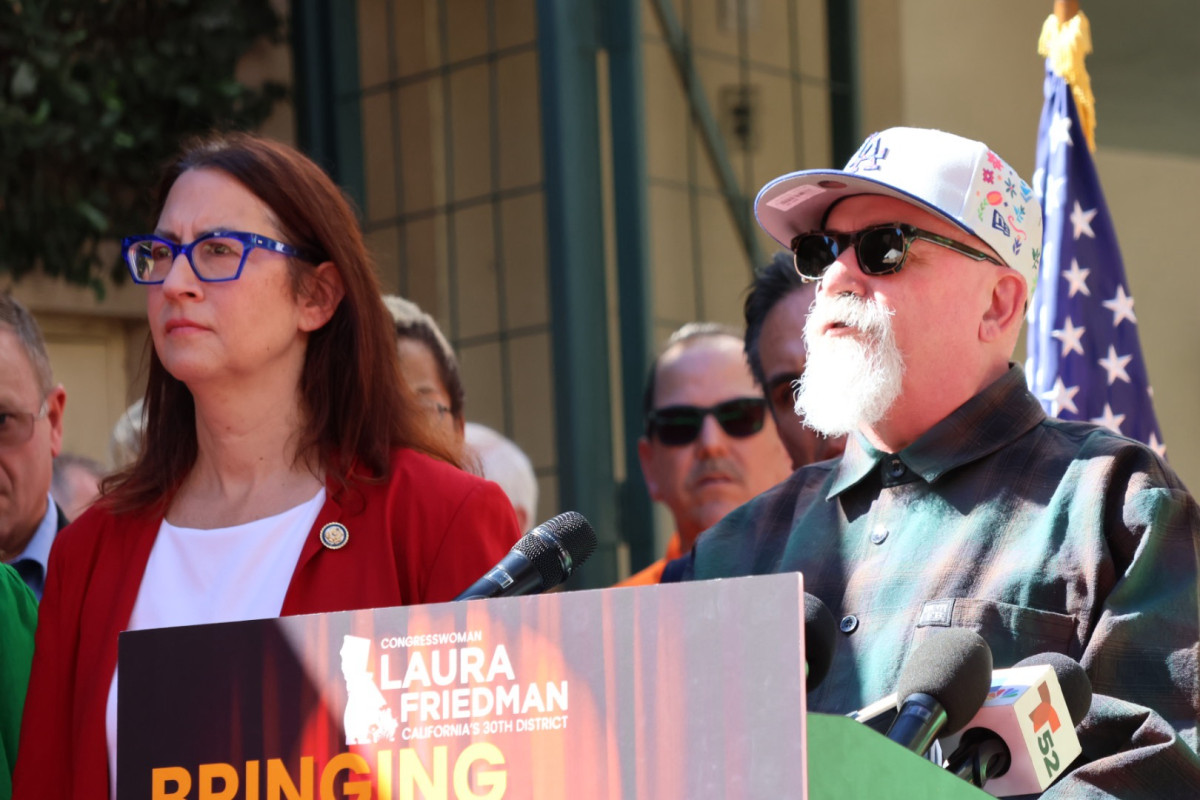
Members of the Los Angeles congressional delegation joined entertainment industry unions in Glendale on Oct. 6 to push for a federal tax credit aimed at bringing film and television production jobs back to the United States.
U.S. Rep. Laura Friedman (D-Glendale) led a rally at the Alex Theatre in support of the Motion Picture, Television, and Entertainment Revitalization Act, bipartisan legislation that would establish a federal tax credit for qualified labor expenses tied to domestic film and television production. Friedman’s district includes West Hollywood and parts of Los Angeles including West Hollywood, Hollywood, the Miracle Mile and Fairfax neighborhoods.
Rep. Ted Lieu (D-Los Angeles), whose district includes Beverly Hills, was among the lawmakers supporting the proposal.
“Southern California is the birthplace of the modern film and television industry,” Lieu said. “From the movies and television shows that have entertained audiences around the world to the hardworking people behind them, this industry is a vital part of our community and economy.”
Supporters of the bill said U.S. productions face increasing competition from countries that offer national filming incentives. According to Friedman’s office, approximately 65 countries provide incentives that the United States does not currently match.
“When a production leaves this country, the stars still work. The crew is who gets left behind,” Friedman said. “Our bipartisan bill is built on labor costs, which means it only pays off when American workers get hired.”
The legislation would provide a 20% federal tax credit on qualifying U.S. labor expenses for feature films, television pilots and television seasons with budgets of more than $1 million, provided at least 75% of principal photography days take place in the United States.
Productions could receive additional 5% credits, up to a maximum 30% credit, for meeting certain criteria. Those include filming at least 30% of production days in a rural opportunity zone or federally declared disaster area, qualifying as an independent production, spending at least $10 million in wages across 10 or more states or increasing domestic production relative to overseas production.
Post-production and visual effects work would also qualify if at least 75% of those expenses are incurred in the United States.
The credit would be transferable, allowing independent producers and other companies without sufficient federal tax liability to sell the credit to another company.
If enacted, the tax credit would apply to productions beginning in taxable years after Dec. 31, 2026.
Supporters said the proposal is intended to protect jobs held by crew members including drivers, grips, electricians, carpenters and other workers whose employment can be affected when productions move overseas.
“You won’t see the carpenters, electricians and camera crews on screen, but they are the backbone of the film industry,” Rep. Linda Sánchez (D-Whittier) said. “Many live in my district and have watched their jobs move overseas as other countries use incentives to lure production away.”
Rep. Judy Chu (D-Pasadena), a co-leader of the legislation, said the federal incentive would complement state-level efforts to retain production, including Senate Bill 186, a film tax credit bill recently signed by Gov. Gavin Newsom which was authored by State Sen. Ben Allen (D-Santa Monica) and Assemblyman Rick Chavez Zbur (D-Los Angeles).
“Southern California has been the heart of America’s film and television industry, but today, too many productions are leaving the United States for countries offering better incentives,” Chu said.
The measure is also supported by major entertainment unions, including SAG-AFTRA, the Writers Guild of America West, the Directors Guild of America, the International Alliance of Theatrical Stage Employees, the Teamsters and LiUNA.
“Film and television are more than entertainment – they are a major American industry that supports hundreds of thousands of good-paying union jobs and generates significant economic activity in communities across the country,” SAG-AFTRA National Executive Director and Chief Negotiator Crabtree-Ireland said.
WGA West Secretary-Treasurer Peter Murrieta said the proposal would support both entertainment workers and businesses that depend on production spending.
“Lawmakers have an opportunity to invest in an important American industry and preserve middle-class jobs by passing the first-ever federal film and television tax incentive program,” Murrieta said.
Other elected officials who joined the Oct. 6 event included Sen. Adam Schiff (D-Calif.), Reps. Maxine Waters (D-Los Angeles), Pete Aguilar (D-Redlands), David Min (D-Irvine) and Derek Tran (D-Cypress), along with Glendale Mayor Ardy Kassakhian.
Entertainment industry representatives at the rally included IATSE International Vice President Mike Miller, Directors Guild of America Associate National Executive Director Rebecca Rhine, Teamsters Motion Picture Division Director Lindsay Dougherty and producer Mike Farah.
“Let’s not overthink this. The world is a complicated place, but this legislation is a no-brainer,” Farah said. “It’s going to get people back to work, and everyone just wants an opportunity to work in the industry they love in this country. Everyone will benefit from this – Republicans, Democrats, workers, audiences – because our industry touches everyone.”