Spectrum News 1: Metro riders endure extreme heat as LA28 funding targets bus stop shade
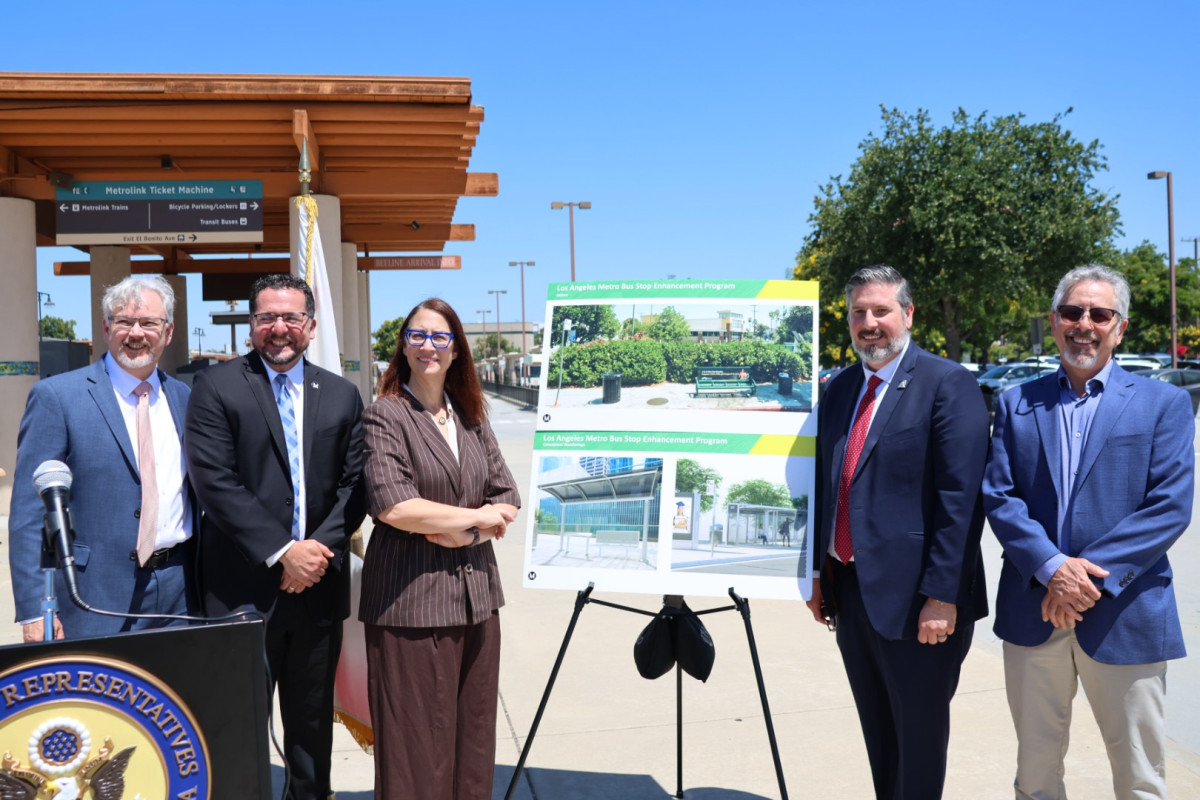
What You Need To Know
- Metro and Metrolink will receive $500,000 in new federal funding to support transit planning ahead of the 2028 Los Angeles Olympic and Paralympic Games
- A portion of $250,000 of that funding will go toward planning and designing improvements to bus shelters, including more shade for riders
- The announcement comes as Southern California experiences another summer heat wave, and officials prepare for hotter conditions during the 2028 Games
- Riders say a lack of shaded bus stops isn’t just uncomfortable, it can also pose health and safety risks during extreme heat
LOS ANGELES — As Southern California swelters through another summer heat wave, many Metro riders are finding themselves waiting for buses with little relief from the sun.
For Josh Latka, that often means searching for the only patch of shade available at his Studio City bus stop.
“The fact that, like, half the bus stops don’t even have bus shelters is wild,” Latka said.
He said long waits only make the problem worse.
“They don’t always come on time, so you’re having to spend extra time in the sun, and then in the evening when you get on, the air conditioning is hit or miss. So it’s still... it’s tough during the summer.”
For some riders, the heat is more than an inconvenience.
Jasmine Flores, a teacher who relies on Metro, said she chose to take a rideshare home instead of waiting about 40 minutes for a bus during this week’s heat wave.
“I have high blood pressure. Some medications I take, I can’t be out in direct sun,” Flores said.
It’s an issue that members of Congress are hoping to address before Los Angeles welcomes millions of visitors for the 2028 Olympic and Paralympic Games.
On Tuesday, Congresswoman Laura Friedman (D-30), who represents the Burbank area, announced $500,000 in new federal funding for Metro and Metrolink to support Olympic transit planning. About $250,000 of that funding will be used to help plan and design improvements to bus shelters.
“In a little over two years, the eyes of the entire world are going to be on stations and bus stops exactly like this during the 2028 Olympics,” Friedman said.
According to Friedman, Los Angeles County has more than 13,000 bus stops, many of which lack basic amenities.
“A huge share of them have no shade, no seating, and no way for riders to know when the next bus is coming,” she said. “A bus stop shouldn’t be a test of how much sun you can take.”
The funding comes as Olympic host cities increasingly grapple with extreme heat.
The Tokyo Olympics saw temperatures climb into the 90s, prompting organizers to implement heat mitigation measures. During the Paris Olympics, athletes and spectators also endured multiple heat waves.
As climate change contributes to more frequent and intense periods of extreme heat, Los Angeles is expected to face similar challenges during the 2028 Games.
Friedman said improving bus shelters is about more than comfort.
“We want everyone to have a pleasant experience, to have a good experience, and to not have to put their own health and safety at risk when they ride transit,” she said.
With just two summers remaining before the Olympic Games, transit officials and lawmakers are racing to improve infrastructure that could make public transportation safer and more inviting for both residents and the millions of visitors expected to travel across Los Angeles during LA28.